Need flooded basement cleanup services in Columbus?
- Safe steps you can take yourself
- Local providers for the hard part
- Plans that fit a busy home
- Request an estimate anytime
No obligation
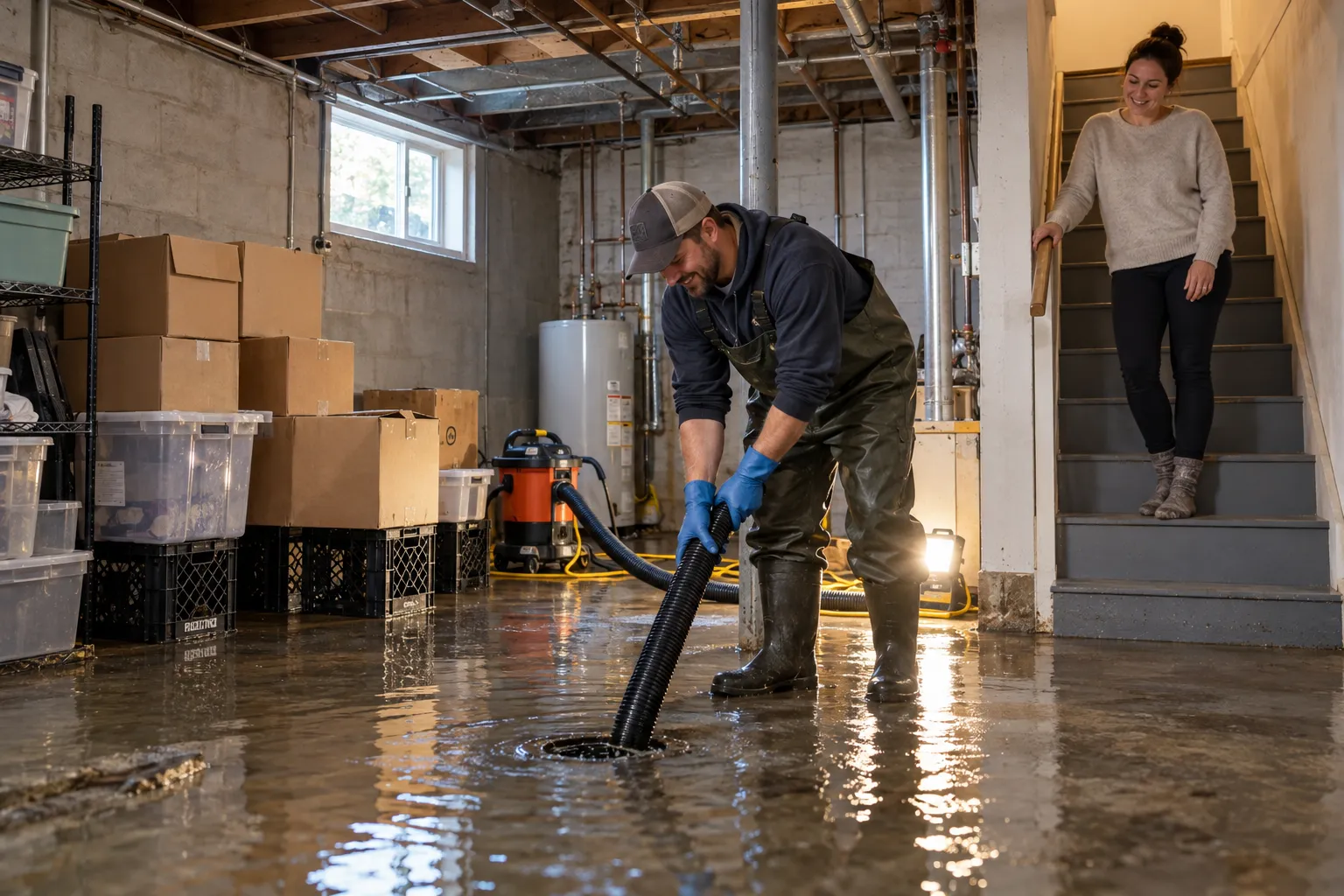
Say you head downstairs and find an inch of water across the floor. Maybe the sump pump quit during a storm. Maybe a pipe let go. Either way, you need a clear plan, and fast.
Arabdrive Restoration is a referral service. We explain the safe first steps, then connect you with independent providers in our network who handle pumping, cleanup, and drying. The provider does the work. We help you reach one and know what to ask. Many providers can respond quickly, and a call is a good way to check who is available near Columbus.
It is a school night. You go down to move the laundry and the floor squishes under your feet. The air smells damp. Your stomach drops.
Take a breath. This happens to many homes, especially after heavy storms and spring thaws. What matters now is the order of your next few moves.
Before you grab a mop, check these things:
Say the water is shallow, clear, and came from a small leak. You can often help, and that is fine.
Now say the water is deep, dark, or still rising. Or it has soaked carpet, walls, or a finished ceiling. A household wet vac cannot keep up with that. It also cannot reach water hiding inside walls and under flooring.
Providers in our network use pumps, extractors, moisture meters, and large drying equipment. That gear finds and removes moisture you cannot see.
Request a callback to check provider availability.
Say you pump it all out and it comes back by morning. The source was never fixed. Finding the cause matters as much as removing the water.
Here are some common sources in homes with full basements:
A provider can often help you work out the source and tell you if a plumber or drain specialist is needed too.
Picture a bungalow with an old frame, a carpeted lower level, and a wet floor left over a long weekend. By Monday, the smell has changed. That is how fast damp spaces turn.
Moisture soaks into drywall, wood, and insulation. Mold can start to grow in a few days in warm, humid weather. Wood trim can swell and warp. Metal parts start to rust.
Quick action keeps the job smaller. It does not take the work away, but it often means fewer materials need to be replaced.
Every home is different, but a typical visit goes in this order:
Say your basement is bare concrete with a washer and some shelves. Cleanup is often simpler. Water comes out, floors get cleaned, and drying is quick.
Now say it has carpet, a family room, and walls with insulation behind them. Water can sit behind the drywall and under the flooring where you cannot see it. Providers may cut small openings to check and dry those spaces. It takes more steps, and the bill reflects that.
You have work, school runs, and a dinner to make. A flooded basement should not take over every hour.
When you talk to a provider, share your real schedule. Ask how long equipment will run, how loud it will be, and whether someone needs to be home. Ask about a plan that keeps the main floor usable and the kids' routine steady.
Say the boxes in the corner got soaked. Do not toss everything in a panic.
Keep a simple list with photos. It helps with any claim later. Some policies may cover sudden damage, so check your policy, and providers can often help document the damage.
Here is the rule that saves money later: dry before rebuild. New drywall or flooring over damp framing can trap moisture and bring mold back.
Ask for moisture readings at the end of the job. Wait for the structure to be truly dry before anyone paints, installs trim, or lays new floors. If your sump pump failed, fix or upgrade it now so the next storm is less scary.
A short list helps you stay in charge of the conversation:
Ask if the provider can supply photos, moisture logs, and itemized notes. These records are useful when you talk to your insurance company. Coverage depends on your policy and the cause of the water, so confirm the details with your insurer.
Pumps and extractors pull water from the floor so the space can begin to dry.
Wet carpet pad, insulation, and damaged drywall are taken out before they hold moisture.
Floors, walls, and hard surfaces are cleaned to deal with dirt and germs left behind.
Meters confirm that framing and floors are dry before any rebuild.
These are typical U.S. ranges, and your job may land outside them. Depth, water type, and finished space all change the price, so ask for a written quote.
| Item | Typical range | Notes |
|---|---|---|
| Pumping out standing water | $300 – $1,500 | Depends on depth and square footage |
| Small clean-water cleanup | $500 – $2,500 | Shallow water, quick response |
| Drying equipment and monitoring | $1,000 – $4,000 | Based on days of equipment use |
| Carpet and pad removal | $1 – $4 per sq ft | Higher if the carpet is glued down |
| Drywall and insulation removal | $2 – $5 per sq ft | Rebuild is usually priced separately |
| Sewage or contaminated water cleanup | $3,000 – $10,000+ | Needs special safety steps and disposal |
Keep clear of water near power, avoid dark or smelly water, and take photos.
Request a callback to check provider availability, or use the form.
A local provider pumps out water and clears soaked materials from the space.
Equipment dries the area, readings confirm it, and repairs begin after that.
You learn what is safe to do alone and when to stop and call for help.
Arabdrive Restoration connects you with independent providers who serve Columbus and nearby towns.
Plans can be shaped around school runs, work hours, and daily family routines.
You can ask questions and request an estimate without committing to any job.
Sometimes. If the water is shallow, clean, and the power is safe, you can move items, mop up, and run fans. Deep, dark, or sewage water, or water soaked into walls, needs a provider with proper pumps, drying equipment, and safety gear.
It varies. Pumping water out may take hours, but drying often takes several days. Finished basements with carpet and drywall usually take longer. Ask the provider for a timeline and how they will check that everything is dry.
It depends on your policy and the cause. Some policies may cover sudden damage, while flood or sewer backup often needs separate coverage. Check your policy, take photos, and ask the provider to help document the damage.
Tell us what happened and where. Request a callback to check provider availability, or send a request and ask for an estimate. No obligation.
No obligation