Need water damage restoration in Columbus?
- Safe steps you can take yourself
- Local providers for the hard part
- Plans that fit a busy home
- Request an estimate anytime
No obligation
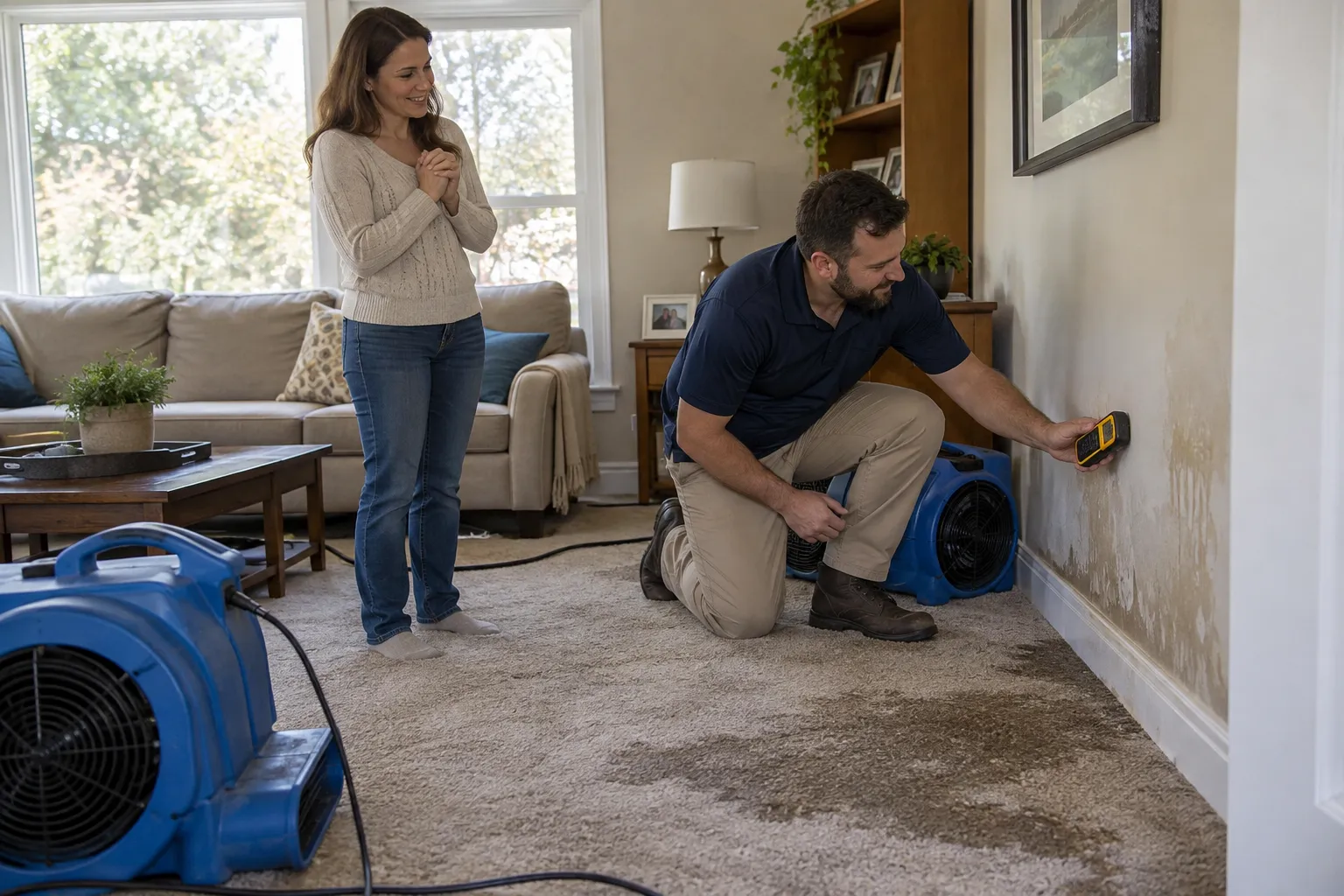
Say you come home and find a soaked carpet, a damp wall, or a puddle that keeps growing. Most people freeze for a moment, then wonder if a mop and a few towels will be enough. Sometimes they are. Often the water has gone somewhere you cannot see.
Arabdrive Restoration is a referral service. We explain the safe first steps you can take on your own, then connect you with independent providers near Columbus for the work that needs pumps, meters, and industrial dryers. The providers do the restoration. This page walks you through the urgent steps first, then the slower ones, so you can choose with a clear head.
Say you come home from work and your shoes squish on the hallway rug. A water heater tank has split, or a pipe let go behind a wall. Your first question is simple: can I handle this, or do I need a pro?
This page answers that. It starts with what is most urgent and moves toward the slower work. Arabdrive Restoration is a referral service. It does not do the repairs. It connects you with independent local providers when the job is bigger than a mop.
Do these in order. They protect you and your home while you decide what comes next.
Say a tub overflowed onto a tile floor and you found it within the hour. Mop or call? Mop. Towels, a wet vacuum, and a fan will do the job.
Now say the water soaked into carpet, crept under the baseboards, or sat overnight. A mop cannot reach what is inside walls and subfloors. That is where professional pumps, moisture meters, and industrial dryers matter.
Request a callback to check provider availability in your area.
Wet materials change fast. Wood swells, paint bubbles, and drywall turns soft. In hot, humid summers, mold can start on damp surfaces within a day or two. In cold months, water that soaks into outer walls can cause trouble later when temperatures drop. Spring melt and heavy storms add another risk, because a sump pump can fail when the power goes out.
Many providers can respond quickly, though availability varies. The sooner a trained provider looks at the damage, the less material you may have to tear out.
Restoration is more than drying a floor. A typical job may include:
Some providers also handle the rebuild. Others stop once the home is dry. Ask which applies before you agree to anything.
Not all water is the same. The kind decides what you can touch.
This comes from a broken supply line or a leaking faucet. If you catch it early, you can often start cleanup yourself.
Think dishwasher or washing machine overflow. It carries soap and dirt. Wear gloves and boots, and know that many people choose a provider here.
Sewage, toilet backups, and river or storm flooding fall in this group. It can carry germs. Stay out, keep kids and pets away, and ask a provider for help. Even clean water can turn worse the longer it sits.
Say you have two kids, a work call at nine, and a soaked laundry room. You cannot pause life for a week. So ask each provider how they schedule the work. Which rooms come first? How long will equipment run? Can you keep using the kitchen and bedrooms?
Some providers set up plastic sheeting to close off the work zone. Fans and dehumidifiers hum for days, and that is normal. Ask for visit times up front so you do not burn extra time off.
Some policies may cover sudden damage, like a burst pipe. Slow leaks and outside flooding often need separate coverage. Check your policy and talk to your agent early.
Providers can often help document damage for a claim with photos, moisture readings, and written notes. Keep receipts, and hold on to damaged items until the adjuster has seen them.
Say you end up with three names. How do you pick? Ask each one:
Be careful with anyone who wants full payment up front or will not explain the steps. Providers in our network are independent, so compare before you decide.
It is tempting to repaint as soon as the wall looks fine. Hold off. Surfaces can feel dry while the framing still holds moisture. Providers track readings until they reach normal levels for your materials. Only then should new drywall, flooring, or paint go in. Skipping this step can bring back odors, warped floors, and mold.
After drying, expect a short list: cleaning, repairs, and a final check. Older frame houses and bungalows may have aging materials, so ask about testing before old walls come apart.
Then take stock. Add a water alarm near the washer, test your sump pump each spring, and clear gutters before storm season. Keep your notes and photos in one folder for any future claim or sale.
Pumps and extractors pull standing water from floors and low spots so materials stop soaking it up.
Air movers and dehumidifiers pull moisture out of walls, subfloors, and framing.
Photos, moisture readings, and notes can help you explain the loss to your insurance company.
Affected surfaces are cleaned, and items that cannot be saved are removed before any rebuilding starts.
Prices depend on how much water there is, what kind it is, and how far it spread. These are typical U.S. ranges only. Ask every provider for a written quote before work begins.
| Item | Typical range | Notes |
|---|---|---|
| Moisture inspection | $100 – $500 | Maps where water traveled |
| Water removal, one area | $400 – $2,500 | Higher for deeper water |
| Structural drying, several days | $1,000 – $4,000 | Equipment runs for days |
| Wet carpet and pad removal | $500 – $2,000 | Depends on room size |
| Drywall cut-out and replacement | $300 – $1,500 | Per affected section |
| Mold testing | $300 – $1,000 | Needed only if mold is suspected |
Shut off the main valve, keep clear of wet electrical areas, and move small items to dry ground.
Take photos and video of the damage and affected belongings before cleanup starts.
Request a callback to check provider availability, or request an estimate through the form.
Wait for dry readings before repairs, so odors and mold do not return.
You get plain advice on what is safe to do yourself before anyone arrives.
Independent providers near Columbus know the area's basements, older homes, and storm patterns.
Ask providers how they plan work around school runs, jobs, and daily routines.
Request an estimate, compare your options, and decide at your own pace.
Small spills of clean water found quickly, yes. If water soaked into walls, carpet pad, or subfloors, or came from a sewer or flood, a provider's equipment is the safer choice.
Mold can start to grow on damp surfaces within a day or two, especially in warm, humid weather. Drying the area fully and soon is the strongest way to lower that risk, so do not put it off. Request a callback to check provider availability in Columbus. A local provider can use fans and dehumidifiers and check hidden spots like wall cavities and floors.
Some policies may cover sudden damage, like a burst pipe, but not slow leaks or outside flooding. Check your policy and talk to your agent.
Tell us what happened and where. Request a callback to check provider availability, or send a request and ask for an estimate. No obligation.
No obligation