Need water extraction & structural drying services in Columbus?
- Safe steps you can take yourself
- Local providers for the hard part
- Plans that fit a busy home
- Request an estimate anytime
No obligation
Say you find an inch of water across the living room floor. You can see the puddles, but the real trouble is what you cannot see. Water soaks into carpet pads, baseboards, wall cavities and subfloors. Water extraction removes the standing water. Structural drying then pulls out the moisture that is left inside the building.
Arabdrive Restoration is a referral service. We do not do the work ourselves. We explain what you can safely do on your own, then connect you with an independent local provider in the Greater Columbus area who has the pumps, air movers and moisture meters. That way you know which steps are yours and which belong to a pro.
Say you come home after a long day and the basement stairs end in a pool of water. Your first urge is to run down and grab the mop. Stop at the top step.
Water near outlets, cords, a furnace or a panel can carry electric current. Do not wade in until the power to that area is off. If you cannot reach the breaker safely, that is your cue to call a pro.
A small spill from a leaking dishwasher hose is something many homeowners can handle. A few towels, a wet vac and a fan can do the job if the water was clean, shallow and found quickly.
Things change when the water is deep, dirty, or has been sitting. Rain, sewer backup and sump pump failure all bring water that is not safe to touch. Wet drywall, insulation and carpet pad also hold far more water than a shop vac can reach.
Water does not stay where it lands. It wicks up walls, slides under flooring and settles into framing. In a humid summer, mold can start to grow in a couple of days.
Many providers can respond quickly, but availability varies. Request a callback to check provider availability in your area.
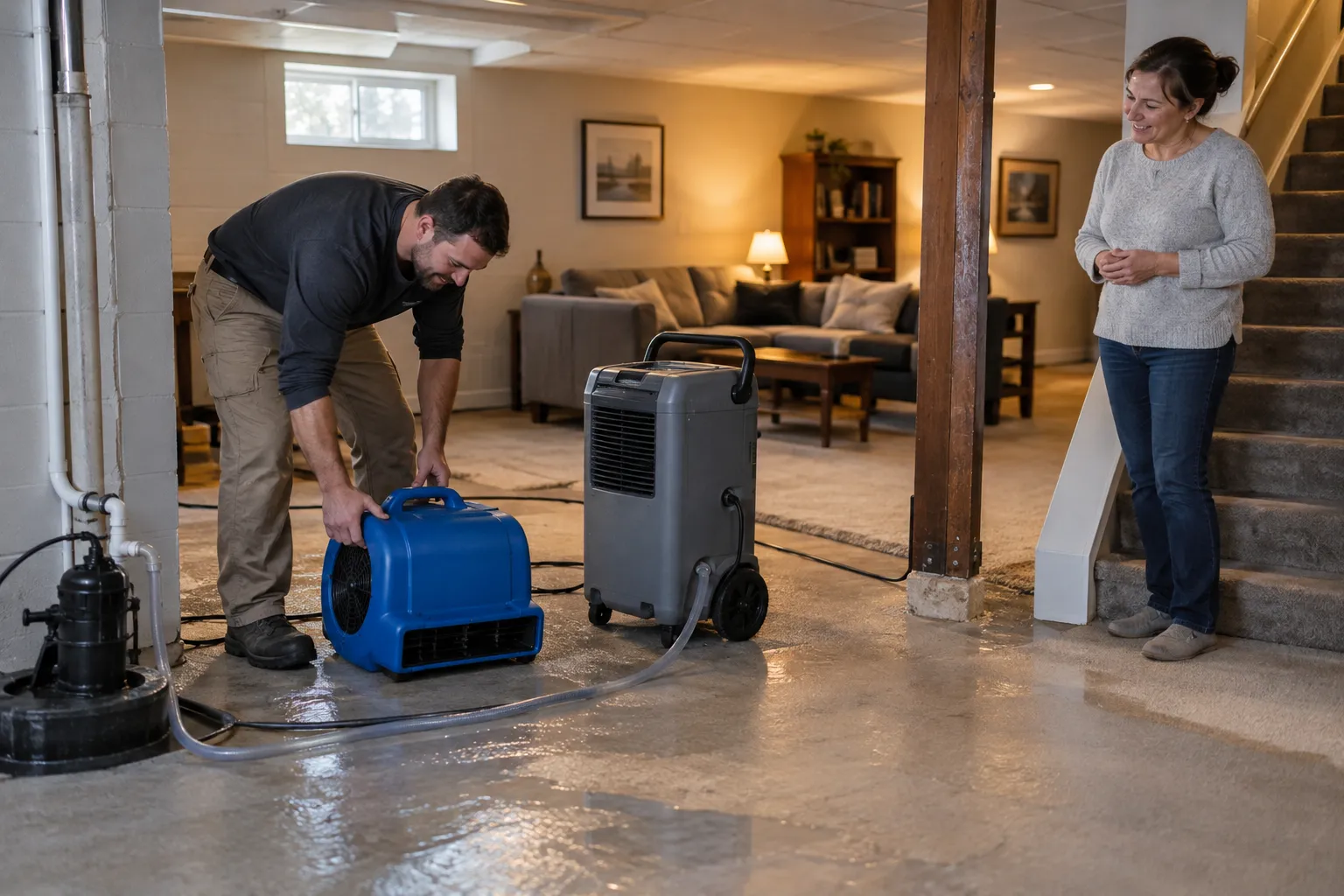
Imagine a provider arriving at that flooded basement. The crew first checks for hazards and turns off what needs to be off. Then they bring in pumps and strong vacuums made for large volumes of water.
Truck-mounted or portable extractors pull water from carpet, pad and hard floors. Deep puddles go first. Then the equipment works across the floor to lift what is left.
A household wet vac holds a few gallons and stops often to empty. It also cannot pull water out of a padded floor or from behind a baseboard. You may think the room looks dry while the layers underneath stay soaked.
Use your wet vac for the small stuff. Leave the big pull to the provider.
Extraction gets rid of the water you can see. Structural drying handles the water you cannot. Providers set up air movers to push dry air across wet surfaces. Dehumidifiers pull moisture out of the air so it can keep drying the materials.
Moisture meters and sometimes thermal cameras help find wet spots inside walls. Small holes may be made at the base of a wall to let air in. Dry before rebuild is the rule: closing up damp walls only hides a mold problem.
Older frame homes often have thick layers of plaster, old wood and tight cavities that hold water longer. Bungalows and ranch homes with full basements tend to collect water low, where it can soak sill plates and the bottom of walls.
A provider may plan the drying differently for each. That is why a written scope of work is worth asking for.
Most jobs run a few days, but it depends on how much water got in, how long it sat, and which materials are wet. Hardwood, plaster and thick framing take longer than carpet. Cold, damp weather and sticky summer air can both slow things down.
A good provider checks moisture readings each visit and removes equipment only when the readings reach a normal level.
There are safe first steps for you to take:
Say there are school drop-offs, work calls and a dog that barks at strangers. Tell the provider this up front. Ask about visit windows, noise from the equipment, and which rooms you can still use.
Some homeowners set the drying equipment up while the family is out. Others ask for one clear point of contact. Either way, a short plan keeps the disruption low.
Before you agree to anything, ask:
Some policies may cover sudden damage, such as a burst pipe, but not slow leaks or flood water. Check your policy and ask your agent. Providers can often help document damage for a claim, so keep your photos and the moisture logs.
Pick up the phone if the water is deeper than a few inches, if it came from outside or a sewer line, if it has been more than a day, or if you smell must. Those are signs the job has gone past towels and fans.
Request a callback to talk through the next step.
Pumps and strong extractors pull water from floors, carpet and pad, so you are not left mopping all day.
Meters and cameras help find hidden wet spots in walls and floors.
Fans and dehumidifiers work together to pull moisture from wood, drywall and framing.
Providers often record daily moisture readings, which show when things are dry and can support an insurance claim.
These are typical U.S. ranges only. Real prices depend on the size of the area, the type of water, the materials and how long drying takes. Always get a written quote.
| Item | Typical range | Notes |
|---|---|---|
| Small water extraction | $300 – $1,000 | One room, shallow clean water |
| Large or basement extraction | $1,000 – $4,000 | Deeper water, more pumping |
| Structural drying equipment | $800 – $3,500 | Often priced per unit per day |
| Moisture inspection and mapping | $150 – $500 | May be part of a larger job |
| Wet drywall or pad removal | $500 – $2,500 | Depends on how far water spread |
| Whole-area drying, several rooms | $2,500 – $10,000 | Longer drying and more equipment |
Turn off power to the wet area if you can reach the breaker without standing in water.
Request a callback to check provider availability, or send the estimate request form.
The provider removes standing water, sets drying equipment and checks moisture levels.
Readings should return to normal before walls close up or floors go back down.
Learn what is safe for you to do before anyone arrives, and what is not.
Independent providers in your area bring the pumps and dryers a home needs.
Simple words and short steps help you decide when to mop and when to call.
Ask questions and request an estimate without any pressure to commit to a job.
Most jobs take a few days, but it varies. Water depth, how long it sat, the materials involved and the weather all matter. Providers check moisture readings until the structure reaches normal levels.
For a small, clean spill found quickly, maybe. For deep, dirty or older water, home fans often cannot dry wall cavities or subfloors, and hidden moisture can lead to mold.
Some policies may cover sudden damage, like a burst pipe, but not flood or slow leaks. Check your policy and ask your agent. Providers can often help document damage for a claim.
Tell us what happened and where. Request a callback to check provider availability, or send a request and ask for an estimate. No obligation.
No obligation